
Understanding the Basics
When it comes to sealing solutions, the choice between custom rubber O-rings and suspension protection bellows can be a game changer. But why is that? In engineering, materials matter. They dictate not only performance but also longevity.
Materials Matter
O-rings are typically made from materials like nitrile, Viton, or silicone. Each of these offers distinct properties—nitrile provides resistance against oil, while silicone shines in extreme temperatures. On the other hand, suspension bellows are commonly crafted from EPDM or neoprene. These materials excel in resisting environmental factors.
- Nitrile: Best for oils.
- Viton: High-temperature resilience.
- Silicone: Flexible across a range of temperatures.
- EPDM: Excellent weather resistance.
- Neoprene: Good all-around performance.
Durability: A Closer Look
Have you considered how long these components will last? For instance, a well-made O-ring can endure thousands of cycles without failure, provided it's properly selected for its application. In contrast, suspension bellows might face wear due to constant movement and environmental exposure. A case study on a fleet of trucks showed that those with high-quality bellows lasted 30% longer than others using cheaper alternatives.
Cost-Effectiveness and Wholesale Pricing
Now, let’s talk numbers. O-rings are usually more economical when purchased in bulk. A company buying them wholesale might see prices as low as $0.10 per piece, depending on size and material. Meanwhile, suspension bellows, priced around $15 to $25 each, reflect their complex manufacturing processes.
- O-rings: Approx. $0.10 per piece (bulk).
- Suspension Bellows: Ranges from $15 to $25.
This raises an interesting question: Is it worth saving a few bucks if it compromises quality? That’s a thought-provoking dilemma for engineers everywhere.
Applications and Use Cases
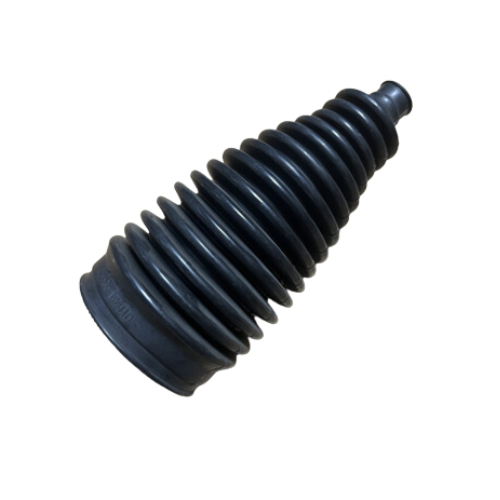
Let’s bring this to life. In an automotive context, custom rubber O-rings find their way into projects like sealing engine components, where reliability is critical. Meanwhile, brands such as Guanghua supply suspension protection bellows designed for off-road vehicles. One specific model, the GHB-2025, is engineered to withstand rugged conditions, ensuring durability.
Performance Under Pressure
Consider the stresses both components endure. O-rings operate under pressure, often compressing within assemblies, while suspension bellows must flex and expand. This flexibility is vital; a failure in a bellows can lead to suspension issues, resulting in costly repairs. Take a recent incident where a low-grade bellows ruptured during a critical off-road event. The vehicle was sidelined, costing the team precious time and finances.
Conclusion: A Unified Approach
Ultimately, choosing between custom rubber O-rings and suspension protection bellows requires a nuanced understanding of your specific needs. Are you prioritizing cost, or is durability your main concern? By analyzing real-world scenarios and considering expert insights, you can make informed decisions that optimize performance.
Remember, whether selecting O-rings or bellows, the importance of quality cannot be overstated. Why gamble with inferior products when superior options are so readily available in the market?







